


The agreement on confidence-building measures reached by Thailand and Cambodia during the second round of compulsory conciliation proceedings in mid-October has raised hopes of a breakthrough in their long-standing maritime dispute in the Gulf of Thailand.
Experts now see new opportunities for a negotiated settlement.
Positive and constructive communication and restoration of high-level diplomatic presence for bilateral engagement are key elements in the six-point confidence-building measures that would not only improve the atmosphere for dialogue but also could change how the two governments manage their differences, they said.
Cambodia initiated the conciliation proceedings on June 2, after Thailand unilaterally terminated the 2001 Memorandum of Understanding (MOU), ending the 25-year-old deal to delimit the maritime boundary and establish a joint development scheme to exploit hydrocarbon resources in the overlapping claims area of the continental shelf.
The five-member Conciliation Commission, established under Annex V of the 1982 United Nations Convention on the Law of the Sea (UNCLOS), is a non-binding dispute settlement mechanism designed primarily for complex maritime disputes, including maritime boundary delimitation, where states are unable to reach an agreement through direct negotiations.
The confidence-building measures are a significant milestone and the first concrete outcome of the conciliation process, said Katrina Cooper, chairperson of the commission.
“This achievement reflects the flexibility shown on both sides and the confidence the parties have placed in the process,” she said in a press statement issued on October 19 after the second round.
Thailand’s softened stance
Thailand had earlier adopted a tough stance, driven by nationalist sentiment, for domestic political gains. Bangkok had said that Cambodia’s initiative to enter the compulsory conciliation process was equivalent to shutting down the bilateral channel for dispute settlement.
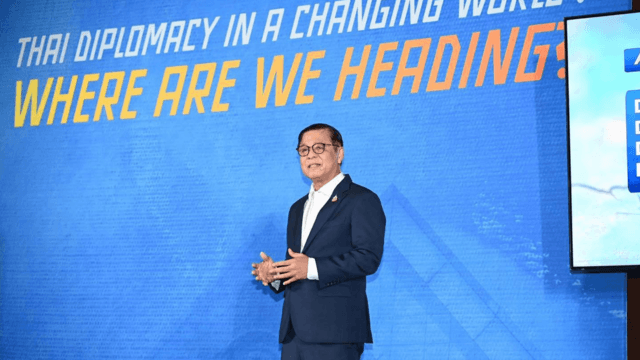
In the opening statement of the first round of meetings in Singapore in September, Thai Foreign Minister Sihasak Phungketkeow had used unusually strong language against his counterpart, describing Cambodia’s claims of respect for international law as “self-serving” and containing “elements of hypocrisy”.
Sihasak toned down the rhetoric in the second round held at The Hague from October 14-18, saying Thailand’s position was based on international law under UNCLOS and that the process should deal exclusively with maritime boundary delimitation.
Both countries presented their respective positions to help the commission better understand their claims, he said.
Thailand supported the confidence-building measures, he said, including refraining from accusations or statements in international forums that could undermine the conciliation process, as well as avoiding actions that might trigger confrontations between the two countries.
Constructive communication
The document of confidence-building measures issued by the commission and annexed in the October 19 press statement, however, makes clear that both sides “will approach public statements on the maritime boundary and on their relationship with one another with a view to creating space for constructive engagement, rather than to generate pressure on the other party or foreclose options”.
Both parties commit to making positive and constructive public statements about the conciliation process, in a manner consistent with the press releases issued by the Permanent Court of Arbitration and in the interest of accuracy and the confidentiality of the process, it said.
“Both parties will guard against misinformation and disinformation that could undermine the conciliation, including in public communications on official and personal platforms, and in domestic and social media,” it said.
“The parties recognise that both have a right to make statements to protect their legitimate rights or to correct factual misinformation and disinformation,” it added.
Practical effects
This provision is particularly important because some aspects of the agreed measures, such as those concerning public communication, remain somewhat ambiguous, said legal expert Phattharaphong Saengkrai of Thammasat University.
“Whenever one country issues a statement criticising another, it can naturally justify its position by arguing that such criticism is necessary to protect its legitimate rights and interests,” he said on Facebook. “The question, then, is how the Conciliation Commission would determine whether such a statement is consistent with the agreed measures.”
The commission document goes on to say that “to foster an atmosphere conducive to reaching an agreement, both sides will undertake to exercise restraint in public communications and statements that could contribute to negative public sentiment or heighten tension between the peoples of the two countries”.
“Nevertheless, I believe these measures could prove highly beneficial and have at least some practical effects,” Phattharaphong said.
“If either party fails to comply with them, particularly if the other party brings the matter before the commission, it risks undermining its credibility in the eyes of the five commissioners,” he added.
Even in the absence of formal sanctions, both countries have a strong incentive to comply fully with the agreed measures in order to maintain the commission’s confidence and demonstrate their good faith throughout the conciliation process, he said.
Restore high-level diplomacy
The conciliation proceedings to settle the maritime dispute began amid tensions following two rounds of major military clashes along the land boundary in July and December 2025. In retaliation during the border flare-up, Thailand and Cambodia downgraded diplomatic ties to as low as the level of second secretary.
The two neighbors reached two ceasefire agreements accompanied by various confidence-building measures and existing bilateral mechanisms, but they have yet to be fully implemented.
The UN-sponsored commission encouraged both countries to implement undertakings that would help create an environment conducive to constructive negotiations within the conciliation.
In the document, which the Cambodian foreign ministry highlighted in its October 19 statement, the commission encouraged both governments to “endeavor to enhance their diplomatic representation by appointing a senior-level representative to the other party’s capital”.
Scholars and experts have been calling on both sides to restore their diplomatic channels by returning their respective ambassadors to their embassies in Bangkok and Phnom Penh.
Kin Phea, director of the International Relations Institute at the Royal Academy of Cambodia, believes the re-establishment of representative offices in the other party’s capital could reduce tensions.
Currently diplomatic relations have been almost entirely cut off, with the two sides maintaining only a second-secretary-level diplomatic presence, he told Phnom Penh Post, adding, “At present, both countries are using the media to respond to each other.”
Though both countries see the necessity of restoring full diplomatic representation, they are advocating different approaches. Bangkok has proposed a step by step upgrade with a deputy chief of the mission, but Phnom Penh wants to return the ambassador to its embassy, according to a diplomatic source.
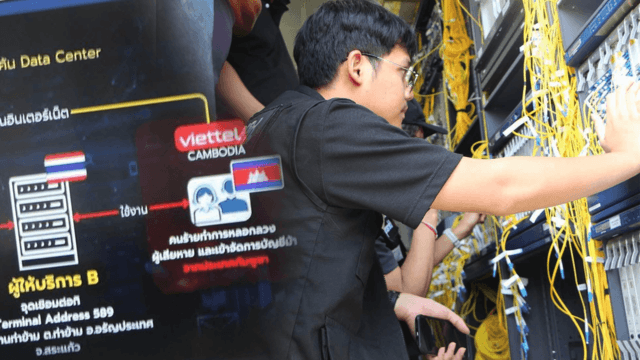
Meanwhile, foreign minister Sihasak said Thailand had already begun the implementation of the confidence-building initiative by deciding to send a senior Royal Thai Police representative to a meeting in Cambodia on combating online scam operations.
Thailand also plans to send a director-level representative to a forthcoming summit of Francophonie countries hosted by Cambodia in the middle of November, despite Thailand participating only as an observer.
By Thai PBS World’s Political Desk