

The US government recently launched a new tariff campaign, targeting major trading partners on the grounds of employing forced labor.
Thailand, among Asian countries that count the United States as one of their largest export markets, has been subjected to a 12.5 per cent tariff alongside China, Japan, the Philippines, Singapore, South Korea and Vietnam. Meanwhile, Cambodia, Indonesia, Malaysia, India and Taiwan face a lower 10 per cent tariff.
The US will levy tariffs of 10 to 12.5 per cent on imports from most major trading partners, in what is seen as the Trump administration’s attempts to re-erect the tariff wall that was previously struck down by the US Supreme Court.
The new levies, which took effect on July 24, follow an investigation into the alleged failure of around 60 economies to prevent forced labor in their supply chains to the detriment of American workers.
Thai responses in the past
“The Thai government should take it seriously [solving the forced labor issue raised by the US],” says Yongyuth Chalamwong, advisor on human resources policy at the Thailand Development Research Institute (TDRI).
“Previous Thai governments handled labor issues raised by the US and the European Union quite well,” Yongyuth adds.
Historically, the US monitors labor and human trafficking issues through the State Department’s annual Trafficking in Persons (TIP) Report.
The 2014-2015 report had led to Thailand’s demotion to Tier 3, the lowest rank, indicating a failure to meet minimum anti-trafficking standards. In 2016, following legal and policy overhaul by Thai authorities, Thailand was upgraded to the Tier 2 Watch List and later to Tier 2.
The EU, too, had issued a formal warning in April 2015, handing Thailand a “yellow card” due to concerns over Illegal, Unreported, and Unregulated fishing. These issues were closely linked to widespread labor abuse, forced labor and human trafficking aboard fishing vessels. The yellow card served as a final warning before a potential “red card”, which would have led to a complete ban on export of seafood products to the EU market.
After Thailand instituted comprehensive legal reforms, expanded monitoring and port inspections, and ratified international labor standards, the EU officially revoked the yellow card in January 2019.
Anusorn Tamajai, Bangkok MP of the opposition People’s Party and deputy chairperson of the House Committee on Finance, Fiscal Affairs, Financial Institutions and Financial Markets, has warned that the impact on the Thai export sector from any US action under Section 301 must be clearly evaluated, and appropriate steps taken.
As per his assessment the direct impact of higher tariffs on Thai exports due to forced labor remains limited. When accounting for the list of goods that remain exempt from tariff — 2,120 items, representing about half of Thailand’s exports to the US — the overall impact on exports from the issue of forced labor is limited. Nevertheless, non-exempted sectors, such as electrical appliances and textiles, could see their export values impacted if labor standards are not upgraded.
Overcapacity a bigger threat
He warns that Thailand could face considerably higher risk of additional tariffs under US Section 301 due to production overcapacity issues. The United States Trade Representative (USTR), the top federal trade agency, may raise concerns over Thailand’s industrial policies involving direct subsidies, special low-interest loans and state export promotions that result in supply far exceeding demand.
This excess supply leads to dumping of goods into the global and US markets to the detriment of domestic US manufacturers and workers.
He anticipates that the USTR may link overcapacity issues to investments by Chinese business groups in Thailand. In his view, such investments represent China relocating its overcapacity to Thailand to use it as a base to dump exports into the US and global markets, negatively impacting domestic US producers.
The overcapacity issue could serve as a pretext for erecting tariff walls against Thai exports and poses the most critical risk to Thailand’s export sector in the second half of the year—particularly for the automotive and auto parts, machinery, and rubber industries.
Consequently, Thailand may come under pressure to further open its markets to various goods, especially agricultural products, and to liberalise foreign equity restrictions in service industries, particularly telecommunications.
Impact on Thailand and other trade partners
Back in April 2025, the Trump administration ranked countries enjoying high trade surpluses with the US and took action by imposing sweeping, high tariff rates on many nations.
The Trump administration placed Thailand 11th on this list and slapped a high tariff rate. Taking recourse to the International Emergency Economic Powers Act (IEEPA), the US imposed a 36 per cent tariff on Thailand based on its calculations.
A series of Thai delegations travelled to Washington for negotiations, leading to the reduction of the tariff rate to 19 per cent on August 7, on the condition that the Agreement on Reciprocal Trade (ART) be finalised along with negotiations on the list of items under Annex III.
In February this year, the Trump tariff regime collapsed when the US Supreme Court ruled the measures under the IEEPA unlawful and ordered them halted.
Consequently, the US administration turned to Section 122 to temporarily impose a uniform 10 per cent import tariff on all countries, which under law could be effective for only 150 days, until July 23, 2026.
Following the expiry of provisions under Section 122, the US pivoted to Section 301 mechanisms. Unlike the IEEPA, Section 301 requires a public hearing process with stakeholders—including US businesses, the private sector, and investigated countries—before the Office of the USTR compiles and presents findings to the president and Congress.
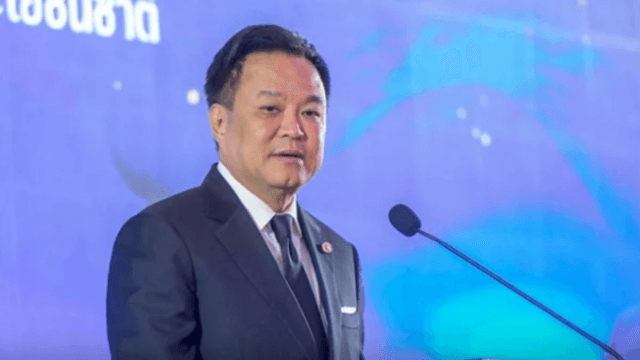
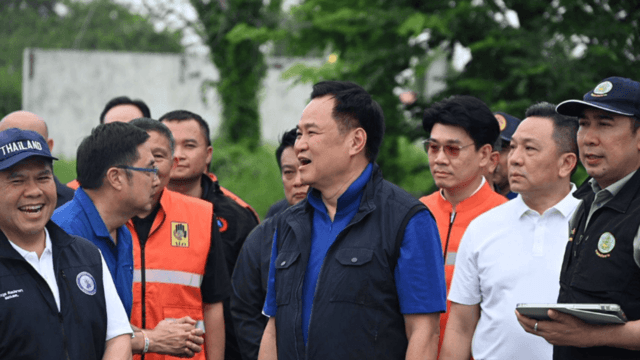
Thailand’s Deputy Prime Minister and Minister of Commerce Suphajee Suthumpun revealed that Thailand was investigated on two main issues: forced labor and structural overcapacity.
She pointed out that Thailand was investigated alongside 60 other countries over the issue of forced labor and is now among 46 countries facing a 12.5 per cent tariff, while 14 countries, most of whom had already signed ART agreements, received a lower rate of 10 per cent. Thailand already has domestic laws addressing forced labor, she said.
Thailand still lacks legislation banning the import of goods produced using forced labor. The drafting of a bill on Human Rights Due Diligence is being speeded up by the Ministry of Justice.
Washington is yet to make an official announcement on the issue of overcapacity.
Although the final outcome remains uncertain, Thailand plans further discussions with the USTR before the official results are announced, she said.
Reduction of trade deficit
Suphajee said that during recent trade negotiations in the US, the Thai negotiating team had recommitted to reducing the US trade deficit with Thailand as per the original agreement.
The team presented data on Thai private sector investments in the US totaling around $19.3 billion, along with additional investment plans for nearly 20 projects, showcasing Thailand’s contribution to creating jobs and revenue in the US.
Regarding the import of US goods under the original agreement, Suphajee indicated that Thailand was seeking to adjust certain targets to make them more realistic.
For instance, the original commitment of 80 aircraft may be reduced, while agricultural purchases originally set at $2.6 billion per year, may be phased into stages given that the first half of the year is over. Negotiations regarding fisheries and seafood products are also ongoing.