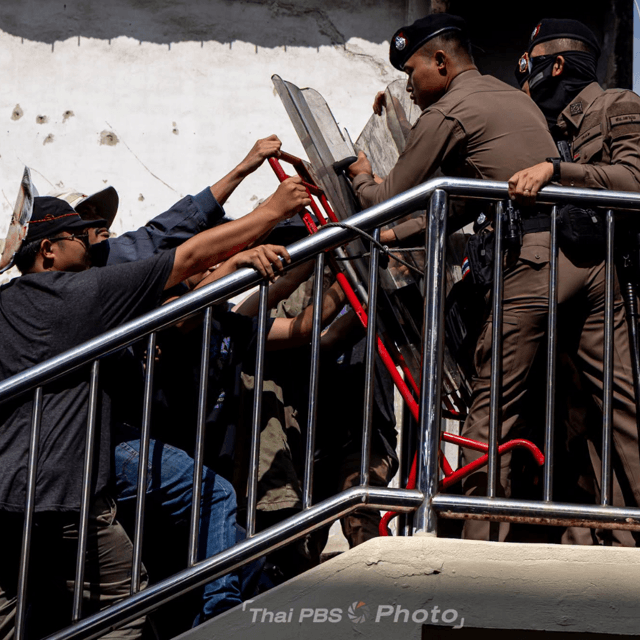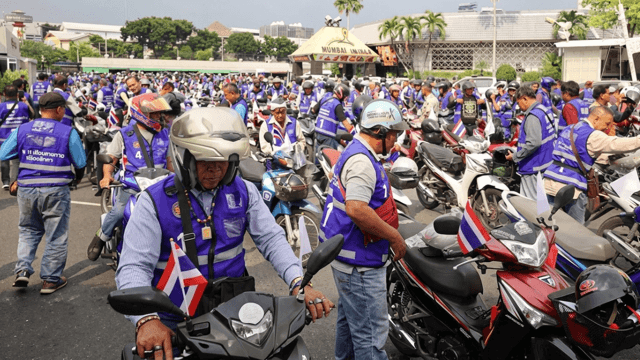



Thailand has launched a high-profile reconciliation push in a fresh bid to heal a bitter social division caused by two decades of political conflict.
The nine-member Peaceful Society Promotion Committee (PSPC), chaired by the prime minister or a deputy PM, is tasked with establishing a framework and reviewing applications for political pardons.
The panel was set up under the new amnesty law – the Peaceful Society Promotion Act passed on August 24 – and comprises five political officials and four experts in legal affairs, human rights, criminal justice, and conflict management.
The amnesty law exonerates all individuals found guilty of non-serious political offences between January 2005 and July last year. It not only grants release for jailed offenders, but also waives investigations, charges, pending cases and criminal records.
However, it excludes those charged or convicted of lese majesté (royal insult), corruption, or crimes resulting in death or serious injury.
Observers estimate that at least 6,000 individuals could benefit from the amnesty, including high-profile politicians who acted as protest leaders. The mass pardon is the latest effort to cure Thailand of its 20-year cycle of political turmoil that triggered two military coups and multiple unstable governments.
Previous amnesty efforts have stalled due to fears they would whitewash political leaders or spark fresh mass protests.
180-day deadline
During its inaugural meeting on September 21, the panel set a 180-day deadline to complete its work.
“We want to see this law enforced immediately. We must complete the task within 180 days, or by around March next year,” said Deputy Prime Minister Pakorn Nilprapunt, appointed to chair the committee on PM Anutin Charnvirakul’s behalf.
Under Article 12 of the Peaceful Society Promotion Act, the deadline can be extended no more than twice, with each extension limited to 90 days.
The eight other members of the committee are:
• Justice Minister Rutthaphon Naowarat (deputy chair)
• Justice Ministry Permanent Secretary Piyasiri Wattanawarangkun
• National Human Rights Commission Secretary-General Hansa Homhual
• Prime Minister's Office Permanent Secretary Yupa Taweewattanakitborvorn (secretary)
• Yutthaporn Issarachai, an expert nominated by the House of Representatives speaker
• Thicha Na Nakhon, expert nominated by the opposition
• Wutthisarn Tanchai, expert nominated by the government
• Prof Kanaphon Chanhom, expert nominated by the Council of University Presidents of Thailand
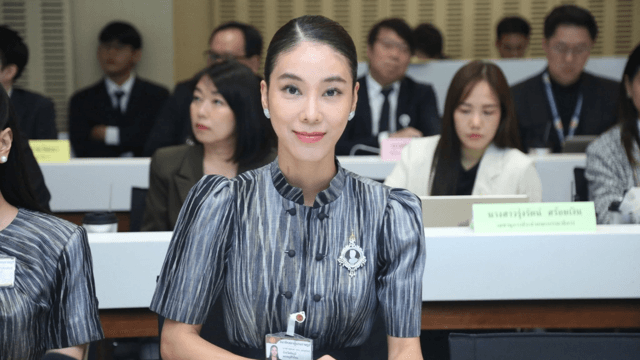
Thicha, the opposition representative, said panel members had agreed on a broad interpretation of amnesty to cover as many individuals as possible. She said the consensus spurred confidence that “a beautiful conclusion” would be achieved for all involved.
Lese majesté still a sticking point
However, critics warned that the exclusion of lese majesté (Article 112) offences could undermine the goal of reconciliation.
More than 290 people – many of them student activists – have been charged under Article 112 since early 2020, according to Thai Lawyers for Human Rights. It estimates that only 10 of the 50-plus individuals currently imprisoned for political offences will benefit from the new amnesty, as the rest were charged with lese majesté.
Critics view Article 112, which carries a punishment of up to 15 years in prison, as a tool to quash political dissent.
Debate over an amnesty covering lese majesté is split, with one side arguing such a move would ignite protest from royalist factions and the other insisting it is necessary to achieve genuine reconciliation.
‘Transparency is top priority’
Gothom Arya, a peace campaigner and proponent of the amnesty law, argues that the committee’s top priority must be ensuring transparency and justice for all. He has called for a legal mechanism that allows the public to raise objections or petition the panel to reconsider or revoke its decisions. This would give the process the legitimacy critical to securing trust from all sides, he said.
Gothom stressed that peacebuilding through amnesty is a gradual process rather than a shortcut to reconciliation.
“Amnesties do not eradicate conflict immediately. They are just one important tool for alleviating hardship, easing anxiety, and relieving affected citizens of legal burdens,” he said.
“An amnesty won’t sweep away problems or erase history. Instead, it creates space for people to come together again, easing political pressure before it erupts into violence.”